
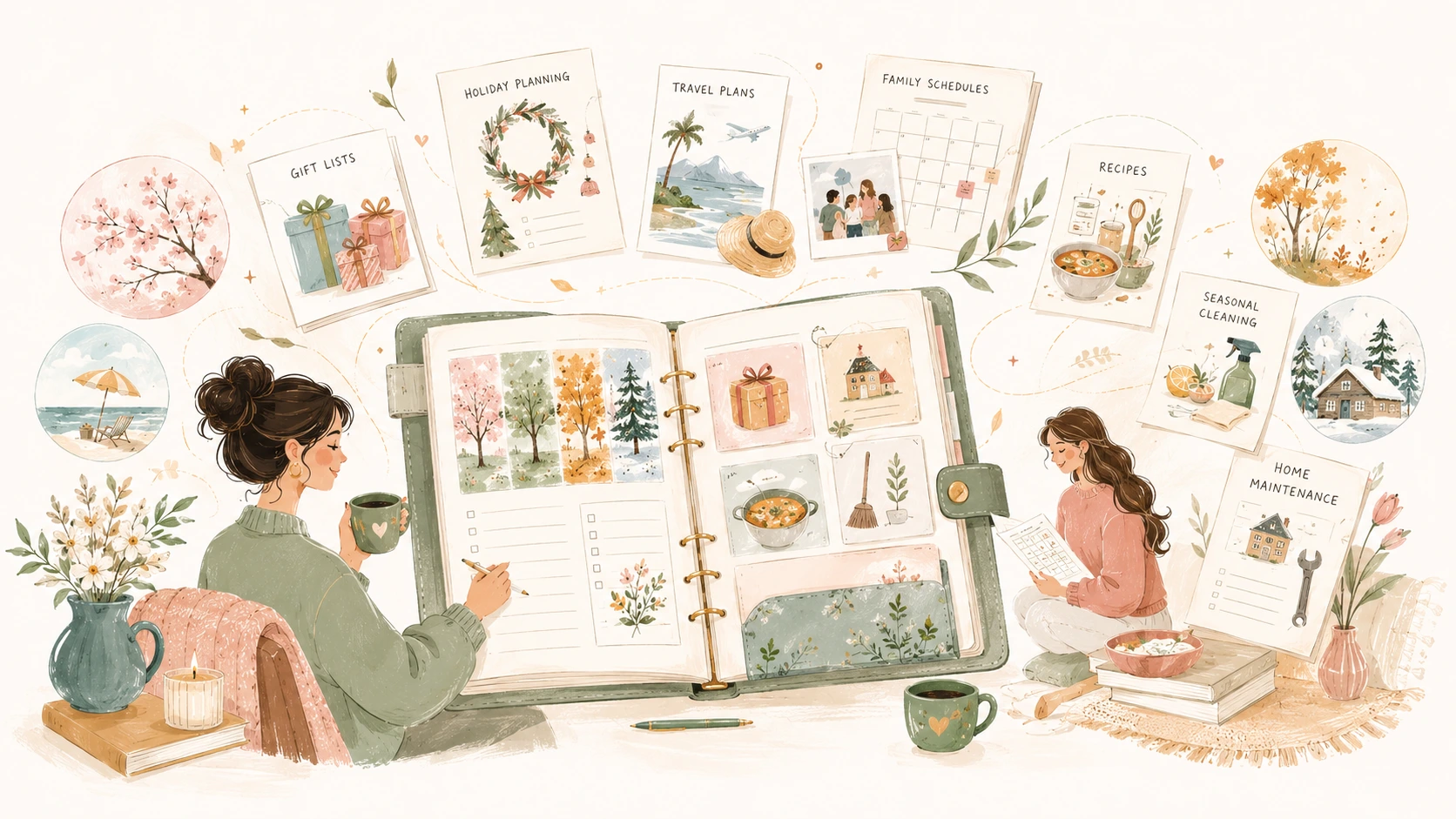
What to Keep in a Seasonal Planning Binder
Seasonal plans can create a surprising amount of loose information. Holiday menus, gift ideas, cleaning tasks, travel details, school events, family schedules, recipes, decoration notes, and reminders all seem manageable when they first appear. Then the season gets closer, and those details start living in too many places.
A seasonal planning binder gives those moving pieces one home. It does not have to be elaborate or filled with perfect pages. It can be a simple place to keep the information you only need during certain times of year, but really want to find when the time comes.
This kind of binder is especially helpful because seasonal planning often repeats. Holidays come back. School breaks return. Guests visit again. Favorite recipes get made again. Decorations are stored and unpacked again. A binder helps you remember what worked last time, what needs to be prepared, and what you do not want to forget.
Why a seasonal binder is useful
A regular planner usually focuses on daily and weekly life. A seasonal binder holds the bigger things that happen around certain parts of the year. It can help with holidays, family traditions, travel, home resets, school breaks, celebrations, and seasonal household tasks.
The benefit is not just organization. It is memory. Without a central place, it is easy to repeat the same questions each year. What did we make for the holiday meal? Where did we order that gift? Which decorations needed replacing? What cleaning tasks mattered before guests arrived? What travel details did we wish we had written down?
A seasonal binder gives you a place to answer those questions once and reuse the information later.
Holiday planning pages
Holidays often come with many small decisions. A printable holiday planning section can help you keep dates, tasks, menus, shopping, guests, and reminders together.
This section might include a holiday overview page, a preparation checklist, a menu plan, a shopping list, and a notes page for traditions or ideas. You can make one section for each major holiday your household celebrates, or keep one general holiday section with pages you print as needed.
The most useful holiday pages are practical. They help you see what needs to happen before the date arrives. This might include ordering supplies, sending invitations, planning food, wrapping gifts, preparing guest rooms, or checking school and work schedules.
You do not need to plan every detail. Even one holiday overview page can make the season feel less scattered.
Gift lists
Gift ideas are easy to lose because they often appear at random times. Someone mentions something they like in July, and by December the idea is gone. A gift list section gives those ideas a place to land.
A simple gift tracker might include the recipient’s name, ideas, size or preference notes, budget, purchased status, wrapped status, and delivery details. If you give gifts for birthdays, holidays, teachers, hosts, neighbors, or coworkers, keeping these notes together can reduce last-minute guessing.
This section can also help prevent overbuying. When you can see what has already been purchased, what still needs attention, and what the budget looks like, it is easier to make thoughtful choices.
Keep a blank gift ideas page in the binder all year. Seasonal planning becomes easier when the ideas are collected before the busy season begins.
Seasonal cleaning tasks
Some cleaning tasks are tied to specific seasons. Spring might bring closet sorting, window cleaning, garden prep, or pantry clearing. Fall might include washing blankets, checking coats, preparing guest spaces, or changing filters. Before holidays, you may want to focus on entryways, bathrooms, kitchens, bedding, and gathering spaces.
A seasonal cleaning checklist should be realistic. It does not need to include every possible deep-cleaning task. Choose the tasks that actually support the season ahead.
For example, if guests are coming, a guest-ready checklist may be more useful than a full-house cleaning list. If winter is approaching, a home-prep checklist might include checking supplies, washing warm bedding, clearing outdoor items, and noting maintenance needs.
The goal is not to create a perfect home. It is to notice the tasks that will make the next season easier.
Recipes and menu ideas
Seasonal recipes are often tied to memory, tradition, and convenience. A binder is a good place to keep recipes you return to during holidays, family gatherings, school breaks, colder months, warmer months, or busy seasons.
You can include printed recipes, handwritten notes, menu plans, grocery lists, and cooking timelines. If a recipe lives online, you may want to print it or write down the source and any changes you make. This is especially useful for recipes you adjust every year.
A seasonal recipe page can include the dish name, where the recipe is stored, ingredients to remember, serving notes, and whether your family liked it. This helps avoid repeating recipes that were too much work or forgetting the ones that were easy and well-loved.
Menus are useful too. If you host a holiday meal, keep a copy of the menu afterward with notes. Write down what was enough, what was too much, and what you would change next time. Future planning becomes much easier when last year’s details are not lost.
Decor ideas and inventory
Seasonal decor can become confusing when items are stored in bins, closets, garages, or attics. A decor section can help you remember what you own, what needs replacing, and what ideas you want to try.
You might keep a decor inventory by season or holiday. Include items, storage location, condition, and notes. For example, “fall wreath, hall closet, good condition” or “string lights, garage bin 2, replace next year.”
This section can also hold inspiration in a practical way. Instead of saving dozens of ideas online and forgetting them, write down a few realistic notes: mantel idea, table colors, porch setup, gift wrap theme, centerpiece plan, or items to look for after-season.
Try to keep decor planning grounded. The binder should help you use what you already have, not pressure you to buy a new set of decorations every season.
Travel plans
Travel involves many details that are easy to scatter across emails, apps, screenshots, and notes. A seasonal binder can hold printed travel pages for school breaks, holiday trips, summer visits, weekend stays, or family vacations.
A travel section might include itinerary details, confirmation numbers, packing lists, transportation notes, pet care arrangements, medication reminders, house-sitting instructions, and emergency contacts.
For recurring trips, keep notes about what worked. Maybe you wished you had packed extra snacks, booked earlier, brought warmer clothes, or left more time between activities. These notes are easy to forget once the trip is over, but they can be very helpful next time.
A printable packing checklist can also reduce repeated thinking. You can create a basic family packing page and adjust it for each season.
Family schedules
Seasonal planning often depends on family schedules. School breaks, sports seasons, work events, religious holidays, family visits, birthdays, camps, performances, and travel dates can all affect the rhythm of a season.
A family schedule section can include monthly overview pages, school calendars, activity schedules, visitor dates, childcare notes, and important deadlines. This section helps you see the season as a whole instead of reacting week by week.
This is especially useful before busy seasons. Looking ahead can help you notice conflicts, plan simple meals during crowded weeks, prepare gifts earlier, or avoid scheduling too much at once.
Keep this section current. Old schedules can make the binder confusing, so remove or archive them when the season ends.
Notes from last season
One of the most useful sections in a seasonal planning binder is a simple review page. This does not need to be formal. It is just a place to write what you want to remember next time.
After a holiday, trip, hosting weekend, school break, or busy season, jot down a few notes. What worked well? What felt like too much? What did you forget? What would you repeat? What would you simplify?
These notes are valuable because they come from real life, not from an ideal plan. Maybe you learned that two desserts were enough, the kids needed more downtime, the guest room needed extra blankets, or a certain gift idea was especially useful.
Future you will appreciate those details.
How to set up the binder simply
Start with a three-ring binder, dividers, a few page protectors, and printable pages that match the sections you need. You do not need to fill the whole binder at once.
A simple seasonal binder might include:
Holiday plans
Gift lists
Cleaning tasks
Recipes and menus
Decor notes
Travel plans
Family schedules
Seasonal notes
If that feels like too much, begin with only the next season. For example, if fall is approaching, create fall cleaning, school schedule, holiday gift ideas, decor inventory, and recipe pages. Add other sections later.
Use page protectors for pages you reference often, such as schedules, menus, packing lists, or holiday timelines. Use pocket folders for loose receipts, printed confirmations, recipe clippings, or school papers.
Keep it flexible
A seasonal binder should not become a large project that creates more work than it saves. If a section is not useful, remove it. If a page feels too detailed, replace it with a simpler one. If you only need the binder during holidays, that is fine.
Printable pages make this easier because you can print only what fits the season you are in. You can add a gift tracker during holiday months, a travel checklist before a trip, or a cleaning page before guests arrive.
The binder should support your actual life. Some households need detailed travel plans. Others need more help with recipes and gifts. Some need school schedules and activity pages. Others need home maintenance reminders and decor storage notes.
There is no single correct version.
Store it where you will use it
Seasonal planning information should be easy to find when the season begins. Store the binder with your other home planning supplies, in a kitchen cabinet, on a home office shelf, or near your family command center.
If the binder includes gift details or private travel information, choose a more private location. You can also keep sensitive pages in a separate folder.
When a new season starts, pull the binder out and place it somewhere visible for a few weeks. This makes it easier to add notes, check lists, and update plans as details appear.
A calmer way to manage seasonal details
A seasonal planning binder helps gather the information that tends to appear in pieces: holiday plans, gift lists, cleaning tasks, recipes, decor ideas, travel details, and family schedules. It gives those details one place to live so they are easier to find, use, and update.
The binder does not need to be perfect. It only needs to be helpful. Start with the season in front of you, print the pages that solve real problems, and let the binder grow from there.
Seasonal life will always have moving parts, but they do not all have to live in your head. A simple binder can make each season feel a little more prepared, a little less scattered, and easier to return to when the next one comes around.