The Difference Between a Pretty Printable and a Useful One
A printable can look beautiful on the screen and still be difficult to use in real life. The colors may be soft, the fonts may be charming, and the layout may look perfect in a product photo, but once it is printed and placed on a desk, fridge, clipboard, or binder, the real test begins.
Can you write on it comfortably? Can you understand the sections quickly? Does it help you make a decision, remember something, or organize a specific part of your day? Or does it simply look nice while asking too much, giving too little space, or adding more visual noise to an already busy routine?
Pretty printables can be enjoyable. There is nothing wrong with wanting pages that feel pleasant to use. But a useful printable does more than decorate a planning routine. It supports the way someone actually thinks, writes, remembers, and follows through.
Pretty is not the problem
A printable does not have to be plain to be useful. A page can be beautiful and practical at the same time. The problem begins when appearance becomes more important than function.
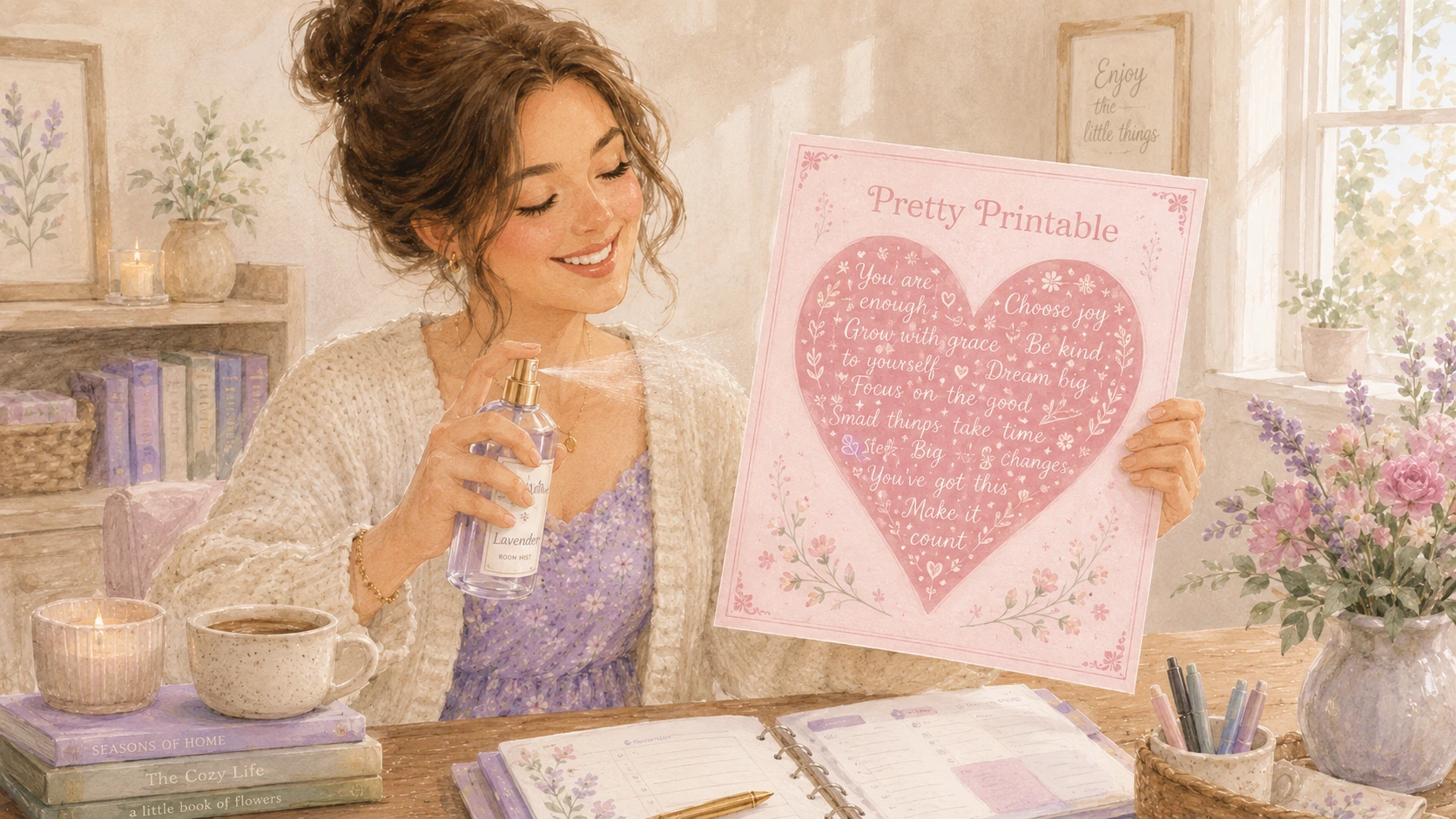
Some printables look lovely because they are designed for a photo, not for everyday use. They may have delicate lettering, tiny boxes, heavy decoration, pale text, or sections that seem charming until you try to write in them. A page that photographs well may not leave enough room for real handwriting, messy notes, crossed-out tasks, or changing plans.
A useful printable should still feel good after it is filled in. It should not only look good when it is blank. Real use includes uneven handwriting, extra notes, arrows, scribbles, and changes. If the design cannot handle that, it may be pretty but not very helpful.
The best printable pages have a quiet balance. They are pleasant enough that you want to use them, but simple enough that the information remains the focus.
Enough space to actually write
One of the clearest signs of a useful printable is enough writing space. This sounds obvious, but it is one of the most common reasons a page does not work.
A meal planner with tiny dinner boxes may look tidy, but it becomes frustrating if you cannot write “chicken soup and leftover rice” without squeezing the words. A weekly planner with narrow task lines may not work if your handwriting is large. A budget page with small boxes may be hard to use if you need to write store names, amounts, and notes.
Useful pages respect real handwriting. They leave room for full words, quick notes, and the occasional change of plan. They do not require someone to write perfectly small or avoid details.
This matters because planning is often done quickly. People fill in pages while standing in the kitchen, sitting on the couch, checking a calendar, talking to a child, or trying to remember what needs to be done before leaving the house. A printable should make that easier, not require careful lettering.
White space is not wasted space. It is what makes the page usable.
Clear sections that make sense at a glance
A useful printable has sections that are easy to understand without studying the page. When someone looks at it, they should know where the appointments go, where the tasks go, where the meals go, and where the notes belong.
Clear sections reduce decision fatigue. Instead of wondering how to use the page, the reader can simply begin. This is especially important for printables used during busy moments, such as morning routines, weekly resets, meal planning, home binders, budget tracking, or school checklists.
Good sections are specific enough to guide you, but not so specific that they become restrictive. For example, a weekly page might include appointments, meals, errands, and priorities. Those categories are clear and useful. But if the page has too many tiny sections, such as mood, water, gratitude, workout, chores, calls, emails, goals, reminders, and reflections, it may become harder to use unless the reader truly wants that level of detail.
The best sections match the purpose of the page. A grocery list should not feel like a goal planner. A morning routine card should not feel like a full family command center. A password page should not be decorative at the expense of clarity.
A purpose beyond looking organized
A useful printable solves a specific problem. It helps gather scattered thoughts, plan meals, track money, remember school items, organize household contacts, or choose the week’s priorities. It has a job.
A pretty printable may create the feeling of organization without actually making anything easier. It might have boxes and headings, but if those headings do not match real needs, the page becomes decorative structure. It looks like a system, but it does not function like one.
Before choosing or printing a page, it helps to ask what the page is supposed to do. Is it for remembering? Sorting? Planning? Tracking? Preparing? Reviewing? If the purpose is clear, it is easier to tell whether the design supports that purpose.
For example, a brain dump page should provide open space because its purpose is collecting messy thoughts. A priority list should be limited because its purpose is choosing what matters most. A subscription tracker should include renewal dates and costs because its purpose is awareness. A school checklist should be quick to scan because its purpose is preventing forgotten items.
When the page has a clear job, the design choices become more practical.
Easy to read after printing
A printable should be judged on paper, not just on a screen. Some designs look clear on a bright device but print too faint, too crowded, or too small.
Pale gray text, thin fonts, low contrast lines, and delicate decorative elements can become hard to read once printed. This matters even more if the page will be used often, placed on the fridge, slipped into a binder sleeve, or checked quickly during a busy part of the day.
Useful printables use readable fonts, clear labels, and enough contrast. They do not make the reader work hard to understand the page. They also avoid placing important information inside overly decorative areas where it gets lost.
If a page is meant for practical household use, readability matters more than visual trendiness. A page can still be soft, calm, and attractive, but the words and writing areas need to be easy to see.
Flexible enough for real life
A useful printable allows plans to change. Real life rarely fits perfectly into boxes. Meals get moved. Appointments shift. Tasks take longer than expected. A child forgets something. A bill clears on a different day. A routine changes during a busy season.
Pages that are too rigid can make normal changes feel like mistakes. A useful printable gives enough structure to guide the user, but enough flexibility to adjust.
This might look like a notes section, blank lines instead of overly specific prompts, open boxes, or a simple layout that does not depend on every section being filled perfectly. It might also mean choosing undated pages so the printable can be used whenever needed, without wasting unused dates.
Flexibility is one of the strengths of printable pages. You can print only what fits the current season. You can use a weekly meal planner during school months, a reset checklist during busy seasons, or a budget page when you want to pay closer attention to spending. The page does not have to become a permanent rule.
Not too many prompts
Prompts can be helpful. They can guide the user and make a blank page easier to begin. But too many prompts can make a printable feel like homework.
A daily page with a few thoughtful sections may be useful. A daily page with twenty questions may become tiring. A journal page with one clear reflection prompt may feel calming. A page packed with emotional check-ins, goals, gratitude, affirmations, habits, meals, water, tasks, and lessons may be too much for someone who only wanted a simple place to think.
Useful printables understand the reader’s energy. They do not ask for more information than the situation requires.
This is especially important for people who already feel overwhelmed. If life feels scattered, a simple brain dump page may be more helpful than a detailed life audit. If mornings are chaotic, routine cards may be more useful than a full morning reflection worksheet. If money feels confusing, a simple money in/out page may be easier to start than a full budgeting workbook.
The right amount of prompting depends on the purpose. A page should guide, not crowd.
Designed for where it will live
A useful printable fits the place where it will be used. A fridge checklist needs to be readable from a standing position. A binder page needs clear headings and enough margin for hole punching. A desk planner can include more detail because the person is likely sitting down to write. A routine card for children needs simple words or pictures. A wallet-size reminder card needs only the essentials.
Thinking about where the page will live changes how you judge it. A page that works beautifully in a binder may not work on a wall. A full-size weekly page may be too large for a small kitchen command center. A tiny tracker may be fine for a planner, but frustrating for a family schedule.
Printable pages are practical tools, so placement matters. The design should support the way the page will be used, not just how it looks when downloaded.
Easy to restart
One of the most useful qualities in a printable is the ability to restart without guilt. A bound planner can make missed weeks feel obvious. A dated page can feel wasted if it is not used. A printable can be gentler because you can print a fresh copy and begin again.
Useful printables make restarting easy. Undated weekly pages, reusable checklists, simple trackers, and open notes pages all allow the user to return when they are ready. This is helpful because real routines are not perfect. People forget. Weeks get busy. Systems pause.
A page that is easy to restart is more likely to become part of real life. It does not punish the user for being inconsistent. It simply offers a place to begin again.
Simple enough to use on an ordinary day
The real test of a printable is not whether it feels exciting when it is new. The real test is whether it still feels usable on an ordinary day.
Can you fill it out when you are tired? Can you glance at it quickly? Can someone else in the household understand it? Can it handle messy handwriting and changed plans? Does it make a task easier, or does it add another step?
A useful printable should lower friction. It should make the next action clearer. It might help you choose dinner, remember a school item, track a bill, plan the week, or collect scattered thoughts. It does not need to do everything.
Often, the most useful pages are the simplest ones: a weekly overview, a meal plan, a checklist, a notes page, a routine card, a contact sheet, or a tracker with only the information that truly matters.
Choosing useful over just pretty
There is nothing wrong with enjoying pretty printables. A page that feels calm and pleasant can make planning more inviting. But beauty should support the page’s purpose, not replace it.
A useful printable has enough space, clear sections, readable text, a specific purpose, and room for real life. It is easy to understand, easy to write on, and easy to return to after a busy week. It helps the user remember, decide, sort, plan, or reset in a way that feels practical.
The best printable pages do not simply look organized. They help life feel a little more manageable when they are actually being used.
That is the difference. A pretty printable catches your eye. A useful one earns its place in your routine.