
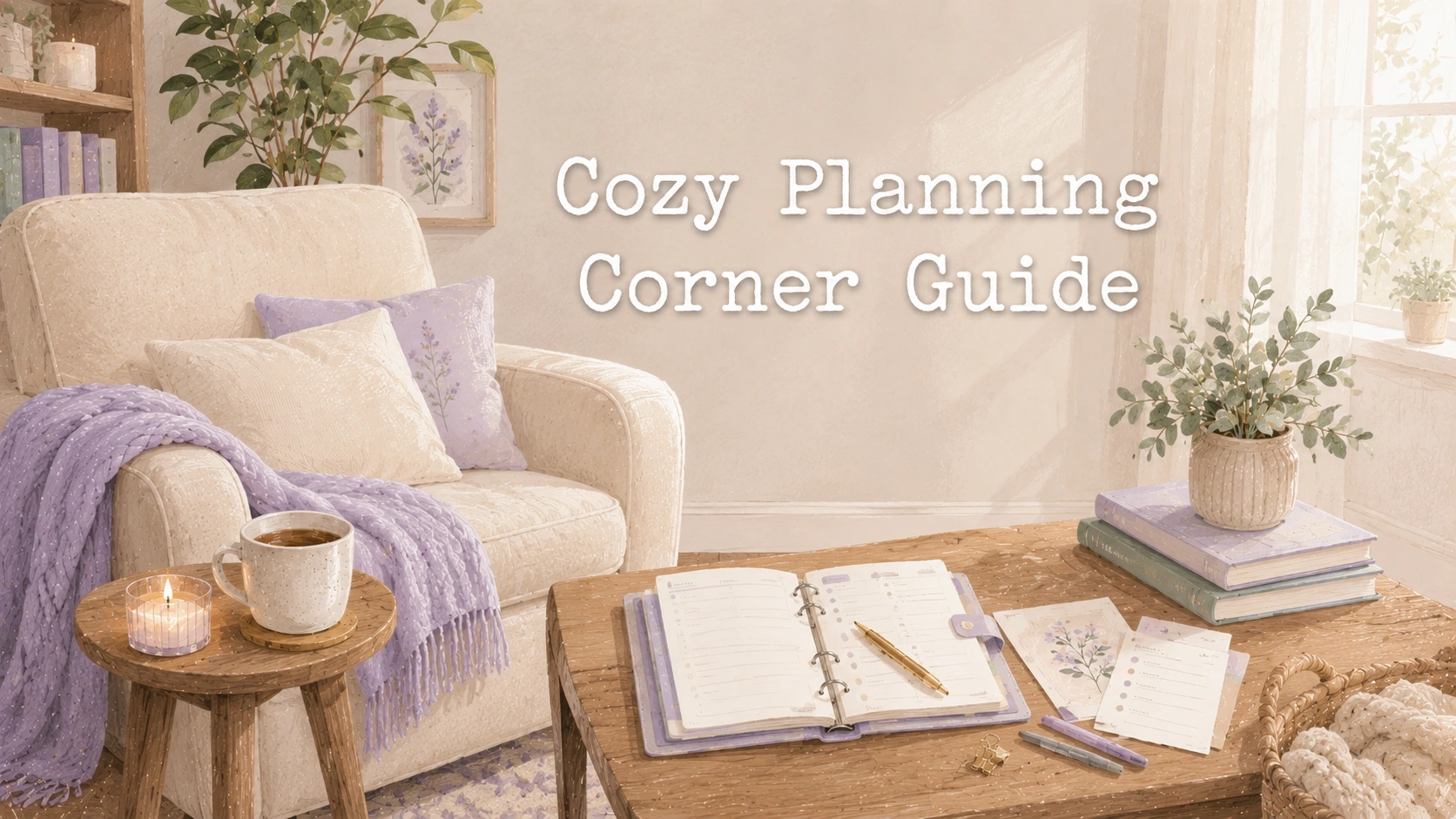
How to Make a Cozy Planning Corner at Home
Planning does not always need to happen at a desk, in a formal office, or inside a perfectly arranged routine. Sometimes the most useful planning space is simply a small corner of the home where your notebook, printable pages, favorite pens, and a cup of tea can stay within reach.
A cozy planning corner is not about creating a picture-perfect setup. It is about making planning feel a little easier to begin. When your supplies have a home and the space feels pleasant to return to, a weekly planning ritual can become less like another chore and more like a quiet pause before the week begins.
This kind of space can be very simple. A chair, a small table, a basket of printables, a notebook, and a few pens may be enough. The goal is to create a place where you can sit for ten or fifteen minutes, look at the week ahead, write down what matters, and feel a little more prepared.
Why a planning corner helps
Planning often gets avoided because it feels scattered before it even begins. The notebook is in one room, the printable pages are in a drawer, the pens are missing, the calendar is on your phone, and the grocery list is somewhere else. By the time you gather everything, the task already feels bigger than it needs to be.
A planning corner removes some of that friction. It gives your planning supplies a regular place to live. You do not have to set up from scratch every time. You know where to sit, where the pages are, and where to find a pen that works.
The space also creates a small mental signal. When you sit there, you know what the moment is for. You are not trying to organize your whole life. You are giving yourself a few minutes to gather appointments, meals, errands, reminders, and thoughts that have been floating around.
That simple shift can make planning feel calmer and more inviting.
Choose a small, realistic spot
A cozy planning corner does not need its own room. It can be a spot at the kitchen table, a chair near a window, the end of a dining room sideboard, a bedroom corner, a small desk, or even a basket that moves with you.
The best place is the one you will actually use. If most of your household planning happens near the kitchen, do not force yourself into a back office just because it looks more organized. If you like quiet, choose a bedroom chair or a small corner away from the busiest part of the house. If you only have shared space, a portable planning basket can work beautifully.
Look for a place with enough surface area for a notebook and a printable page. Good lighting helps too, especially if you plan in the evening. You do not need a large workspace. You only need enough room to write comfortably and see what you are doing.
Try not to wait for the perfect setup. A planning corner can begin with what you already have.
Gather your basic supplies
The heart of the planning corner is not decoration. It is the small group of tools that help you think clearly.
A useful setup might include a notebook, a few printable pages, pens you enjoy using, sticky notes, paper clips, a folder or binder, and a small tray or basket to hold everything. If you like digital planning, you might also keep a tablet nearby with your printable PDFs saved in one folder.
Printable pages are especially helpful because they let you choose what kind of planning the week actually needs. You might keep a weekly overview, meal planner, brain dump page, priority list, habit tracker, budget page, or reset checklist in your corner. You do not need to use all of them every week. The point is to have a small stack of useful options ready.
A notebook gives you flexible space for thoughts that do not fit neatly into a printable layout. It can hold lists, ideas, reminders, rough plans, and notes from the week. Some people like one notebook for everything. Others prefer a notebook for planning and separate printables for specific tasks like meals or money.
Keep the supplies simple enough that the corner stays easy to maintain.
Add comfort without clutter
A cozy planning corner should feel pleasant, but it does not need to become a decorating project. A soft throw, a candle, a small lamp, a coaster, a favorite mug, or a small plant can make the space feel more inviting. These little details can help you want to sit down and stay for a few minutes.
Tea, coffee, or another warm drink can become part of the ritual. The drink is not necessary, of course, but it can help mark the moment. It says, quietly, that this is a pause. You are not rushing through another task. You are taking a little time to look ahead.
The key is to avoid adding so much that the space becomes crowded. If the table is covered with supplies, décor, papers, and half-finished projects, it may stop feeling peaceful. Leave some open space for writing. A calm corner works best when it is easy to use.
Cozy does not have to mean full. Often, it means simple, warm, and ready.
Keep printable pages within reach
If you use printable planning pages, store them where they are easy to grab. A folder, binder, magazine file, clipboard, or small drawer can work well. You might sort pages by type: weekly planning, meals, money, routines, notes, and reset pages.
It can help to keep a few copies of your most-used pages already printed. When planning feels scattered, you do not want to search for a file, send it to the printer, and wait before you can begin. Having pages ready lowers the barrier.
A weekly planning page is a good starting point for the corner. It can hold appointments, tasks, errands, meals, and reminders. A brain dump page is useful when your thoughts feel busy. A meal planner can make grocery decisions easier. A priority page can help when the week has too many possible tasks.
Choose pages that match your real routine. If you never use habit trackers, do not keep a stack of them just because they look nice. If meal planning helps every week, make that page easy to find. Your corner should support the way you actually plan.
Create a simple weekly ritual
A planning corner becomes more useful when it is connected to a small ritual. This does not need to be long or formal. Ten to twenty minutes once a week may be enough.
Many people like planning on Sunday because it creates a pause before the week begins. But your planning ritual can happen whenever it fits your life. Friday afternoon, Monday morning, or the evening before your workweek starts can all work.
A simple weekly ritual might look like this: make tea, sit down with your notebook, check your calendar, fill out a weekly printable, choose a few meals, list errands, and write three main priorities. That is all.
The ritual works because it gathers scattered details into one place. You can see what is coming. You can notice busy days before they arrive. You can choose simple meals for crowded evenings. You can move a task off your mind and onto paper.
Try to keep the ritual gentle. It should not feel like a meeting with yourself where you review everything you have not done. It should feel like a reset.
Use the notebook for loose thoughts
A notebook is helpful in a planning corner because not every thought belongs on a structured page. Some thoughts are messy. Some are unfinished. Some are reminders, ideas, worries, or small details that need to be written somewhere before they disappear.
Use the notebook as a landing place. During your weekly planning ritual, you might write down everything that is on your mind before sorting it. This could include errands, appointments, things to buy, people to message, projects to revisit, home tasks, or ideas for later.
After that, you can move only the useful pieces onto your printable pages. Appointments go on the weekly page. Groceries go on the meal plan. Important tasks go on the priority list. Everything else can stay in the notebook until it becomes relevant.
This keeps the printable pages from becoming overloaded. The notebook can hold the messy middle, while the printables hold the clearer plan.
Make room for real life
A cozy planning corner should not create pressure to plan a perfect week. Real weeks change. Appointments move, meals get swapped, energy dips, errands wait, and unexpected things appear. Your planning space should make room for that.
Choose printable pages with enough flexibility. Open notes sections, simple weekly layouts, and short priority lists tend to be easier to use than pages packed with tiny boxes. If a page makes you feel behind, it may not belong in your corner.
Keep correction tape, sticky notes, or a pencil nearby if that helps you feel more comfortable changing plans. Crossed-out tasks are not a problem. They are part of planning.
The purpose of the corner is not to control every detail. It is to give you a place to return when the details feel scattered.
Keep the corner easy to reset
A planning corner can become cluttered if every paper stays there forever. Build in a small reset habit so the space remains pleasant.
At the end of each planning session, remove old pages, file anything worth saving, recycle what you no longer need, and place fresh pages where you can reach them next time. Put pens back in their cup or pouch. Clear the surface enough that it feels ready for the next visit.
This small reset matters because the corner should feel welcoming. If it becomes a pile of old lists and loose papers, you may avoid it. A few minutes of tidying keeps the space useful.
A folder or binder can help with this. Current pages can stay at the front. Older pages can be archived only if they are useful. There is no need to save every weekly plan unless you want to. Sometimes the best thing is to let an old page go and start fresh.
Make it personal, not perfect
Your planning corner should reflect what makes you feel calm and focused. That might be soft lighting, a favorite pen, a quiet playlist, a plain notebook, a floral printable, a neutral binder, or a mug that feels good in your hands.
It does not need to look like anyone else’s version of organized. Some people enjoy a styled corner with matching supplies. Others prefer a simple basket tucked beside a chair. Some like paper pages spread out on a table. Others like one notebook and one weekly printable.
The measure of success is not how the corner looks in a photo. It is whether you use it. If it helps you sit down, gather your thoughts, and move into the week with a little more clarity, it is working.
A quiet place to begin again
A cozy planning corner is a small invitation to slow down and look ahead. It gives your notebook, printable pages, pens, and weekly thoughts a place to belong. It can turn planning from a scattered task into a simple ritual.
You do not need a perfect room, a large desk, or a complicated planner. A comfortable chair, a small surface, a few useful pages, and a warm drink can be enough. What matters is that the space feels easy to return to.
When planning has a gentle place in your home, it can become less about catching up and more about beginning again. A weekly ritual, supported by simple printables and a few comforting details, can help the week feel a little more settled before it starts.