
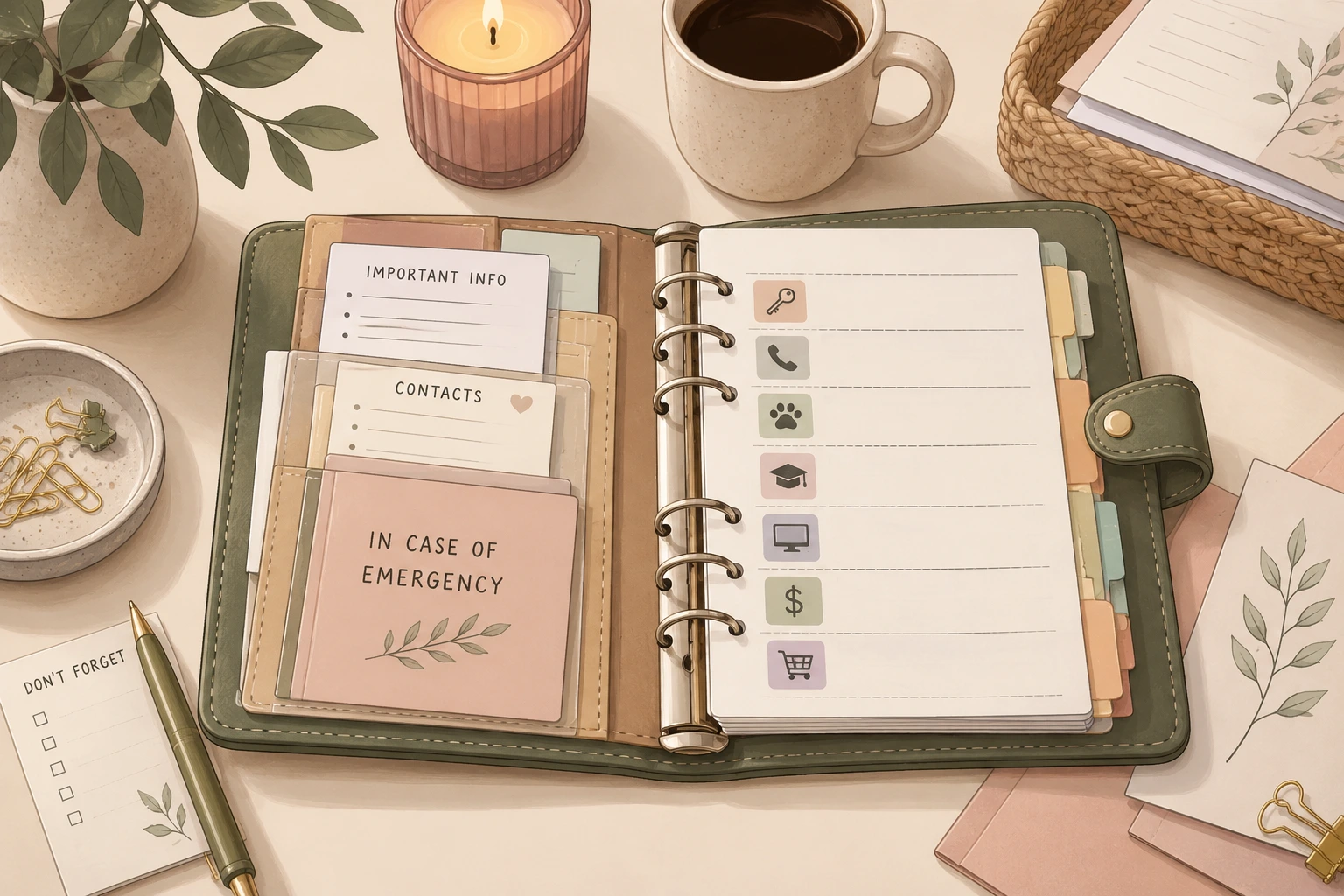
How to Stop Buying Planners You Never Use
Buying a new planner can feel like a fresh start. The clean pages, neat layouts, monthly tabs, habit trackers, goal sections, and pretty covers all seem to promise a more organized version of daily life. Then a few weeks later, the planner is sitting on a shelf, half-filled, with several blank weeks in a row.
This does not usually happen because someone is lazy or incapable of planning. More often, the planner simply does not match the way they think, remember, choose, or move through a real week.
A planner only works when it fits the person using it. That is why printable planning pages can be so useful. Instead of committing to a full planner that may not suit your routine, you can choose the pages that support the way your mind naturally organizes information. The goal is not to find the most impressive planner. The goal is to find a planning style you will actually return to.
Why planners get abandoned
Most planners are designed around a complete system. They often include yearly goals, monthly calendars, weekly spreads, daily schedules, trackers, reflection pages, meal plans, budget pages, cleaning routines, and project sections. That can be helpful for some people, but overwhelming for others.
When a planner asks for too much information, it becomes another task. Instead of helping you feel clear, it creates a quiet sense of being behind. A blank week starts to feel like failure. A missed tracker makes the whole page look unfinished. A daily layout with too many boxes reminds you of all the things you did not write down.
Another reason planners are abandoned is that they are often bought for an ideal routine instead of a real one. You may imagine sitting down every morning with coffee, filling out priorities, tracking habits, planning meals, and reviewing goals. But if your mornings are rushed, your work changes often, or your attention moves better in short bursts, that kind of planner may not fit your life.
The problem is not planning itself. The problem is choosing a format that requires you to become a different kind of person before it becomes useful.
Notice how you actually think
Before choosing another planner, it helps to notice how you naturally organize your thoughts. Some people think in time blocks. They like seeing the day divided by hour, with appointments and tasks placed in specific spaces. Others think in lists. They need a simple place to collect everything and choose from it as the day unfolds.
Some people think visually. They like boxes, circles, color, arrows, and open space. Some people think by category. They want home tasks in one area, work tasks in another, errands in another, and reminders somewhere separate. Others think by energy. They may prefer to sort tasks into quick jobs, focused work, things to do when out of the house, and tasks that can wait.
There is no one correct planning style. A planner that looks too plain to one person may feel peaceful to another. A detailed page that helps one person feel in control may make someone else shut the planner and avoid it completely.
The better question is not “Which planner is best?” It is “What kind of page makes my next step easier to see?”
Stop buying planners for your fantasy schedule
A common planning mistake is buying for the life you wish you had rather than the week you actually live. This is easy to do because planners often sell a feeling. They show calm desks, tidy handwriting, balanced routines, and full pages that make everything look manageable.
But your planner needs to work on a tired Tuesday. It needs to work when dinner is not planned, when the laundry is behind, when appointments change, when your child needs something at the last minute, or when your brain does not want to process a full page of tiny sections.
A planner that only works during a perfect week is not very useful. A better planner, or a better printable page, should still make sense during an ordinary messy week. It should give you somewhere to write what matters without making you feel like you have to maintain a whole performance of organization.
This is where printable pages can help. You do not have to buy an entire bound planner based on a hopeful version of your schedule. You can start with one page that solves one real problem.
Choose pages by problem, not by appearance
Pretty pages are enjoyable, and there is nothing wrong with wanting a planner that looks nice. But appearance should not be the main reason you choose a planning tool. The page needs to answer a real need.
If you forget appointments, a weekly overview may help. If your tasks are scattered, a simple brain dump page may be more useful than a daily schedule. If dinner decisions cause stress, a meal planning page may support your week better than a habit tracker. If your home tasks repeat, a reusable checklist might work better than writing the same chores again and again.
A good printable page has a clear job. It should help you remember, choose, sort, simplify, or prepare. If you cannot explain what the page will help you do, it may become another unused download.
Try asking yourself what usually makes your week feel scattered. Is it too many appointments? Too many loose tasks? Meals? Errands? Household reminders? School notes? Work deadlines? Choose a page that meets that specific need first.
Start smaller than you think
One reason people abandon planners is that they try to use too many sections at once. A new planner can make you want to track everything: sleep, water, meals, workouts, spending, cleaning, gratitude, goals, routines, appointments, and daily tasks. That kind of full-system planning can work for some people, but it can also become exhausting.
A smaller start is often more sustainable. Choose one printable page and use it for two weeks. Not ten pages. Not a full binder. One page.
A weekly page is often a good place to begin because it gives you a visible shape of the week without asking you to plan every hour. A simple task list can also work well if your main problem is remembering what needs to be done. For some people, a monthly calendar is enough because appointments are the only things that truly need a fixed place.
Starting small gives you useful information. If you avoid the page, notice why. Was it too detailed? Too plain? Too structured? Not structured enough? Did it live in the wrong place? Did you forget to check it? These answers are more helpful than buying another full planner and hoping it feels different.
Match the page to your attention span
Some planning pages require daily attention. Others only need to be checked once or twice a week. Knowing which one fits you can prevent another abandoned system.
If you enjoy daily routines, a daily printable may be helpful. It can give you space for appointments, priorities, notes, meals, and reminders. But if daily planning feels like too much upkeep, a daily page may become a stack of unused paper.
If you prefer fewer check-ins, a weekly printable may fit better. You can sit down once, map the week, and glance at the page as needed. If even that feels like too much, a simple running list or monthly overview might be enough.
The best planning page is not the one with the most features. It is the one that asks for the amount of attention you can realistically give.
Think about where the planner will live
A planning system can fail simply because it is stored in the wrong place. A beautiful planner tucked away in a drawer is easy to forget. A printable page on the fridge, desk, clipboard, or inside a home binder may be easier to use because it stays visible.
Some people need their planner to travel with them. Others need it to stay at home where family information is managed. Some prefer paper because writing helps them think. Others prefer a printable PDF on a tablet because they dislike paper clutter.
Before choosing a planner page, think about when you will use it. Will you check it in the morning? During a Sunday reset? At your desk? In the kitchen? While planning meals? Before leaving the house?
The location matters because planning is not just about writing things down. It is about returning to the information when you need it.
Avoid pages that create guilt
A planner should not make you feel behind every time you open it. Some layouts unintentionally do this by including too many trackers, too many unused boxes, or too much space for goals and reflections when what you really need is a clear list and a calendar.
If a page makes you feel like you are being graded, it may not be the right page. This is especially true with habit trackers. They can be useful, but they can also become discouraging if a few missed days make the whole month look like a failure.
Choose forgiving layouts. Look for pages with open notes sections, flexible lists, simple weekly boxes, or spaces that can be repurposed. A good printable should allow your week to change. It should not punish you for being human.
Blank space is not wasted space. It gives your week room to breathe.
Use printable pages as a testing ground
One of the most practical reasons to use printable planning pages is that they let you experiment without committing to a full planner. You can test a weekly layout, a meal planner, a daily page, a project planner, or a home checklist and see what actually helps.
After using a page for a little while, notice what you naturally fill in and what you ignore. The ignored sections are useful clues. If you never use the hourly schedule, you may not need a time-blocked layout. If you always fill the notes area but skip the priority boxes, you may prefer open planning. If you use meal planning every week but ignore habit tracking, meals may be the area where planning gives you the most relief.
This kind of experimenting can save money and frustration. Instead of buying another planner because the last one did not work, you begin to understand what kind of structure your mind accepts.
Build your own simple planning stack
Once you know what works, you can build a small set of printable pages that fit your life. This does not need to become a large binder unless you want it to.
A simple planning stack might include a monthly calendar for appointments, a weekly overview for tasks and meals, and a running list for loose reminders. That may be enough. Another person might use a daily page during busy seasons and switch back to a weekly page when life slows down.
The benefit of printable pages is flexibility. You can print what you need when you need it. You can stop using pages that no longer fit. You can add a meal planner during a hectic school season or a project page during a home renovation. Your planning system can change without requiring a whole new planner.
Let the planner serve the week
The right planner does not demand constant attention. It supports the way you already move through life. It helps you remember what matters, see what is coming, and make a few clearer choices.
If you keep buying planners you never use, it may be time to stop looking for the perfect planner and start looking for the right page. A page that matches your thinking style, your attention span, your real schedule, and the problems you actually need help solving is far more useful than a beautiful system you avoid.
Printable pages can make planning feel lighter because they do not ask for lifelong commitment. They let you try, adjust, simplify, and keep only what works. That is often how a planning habit becomes usable: not by forcing yourself into a system, but by choosing tools that meet you where you are.